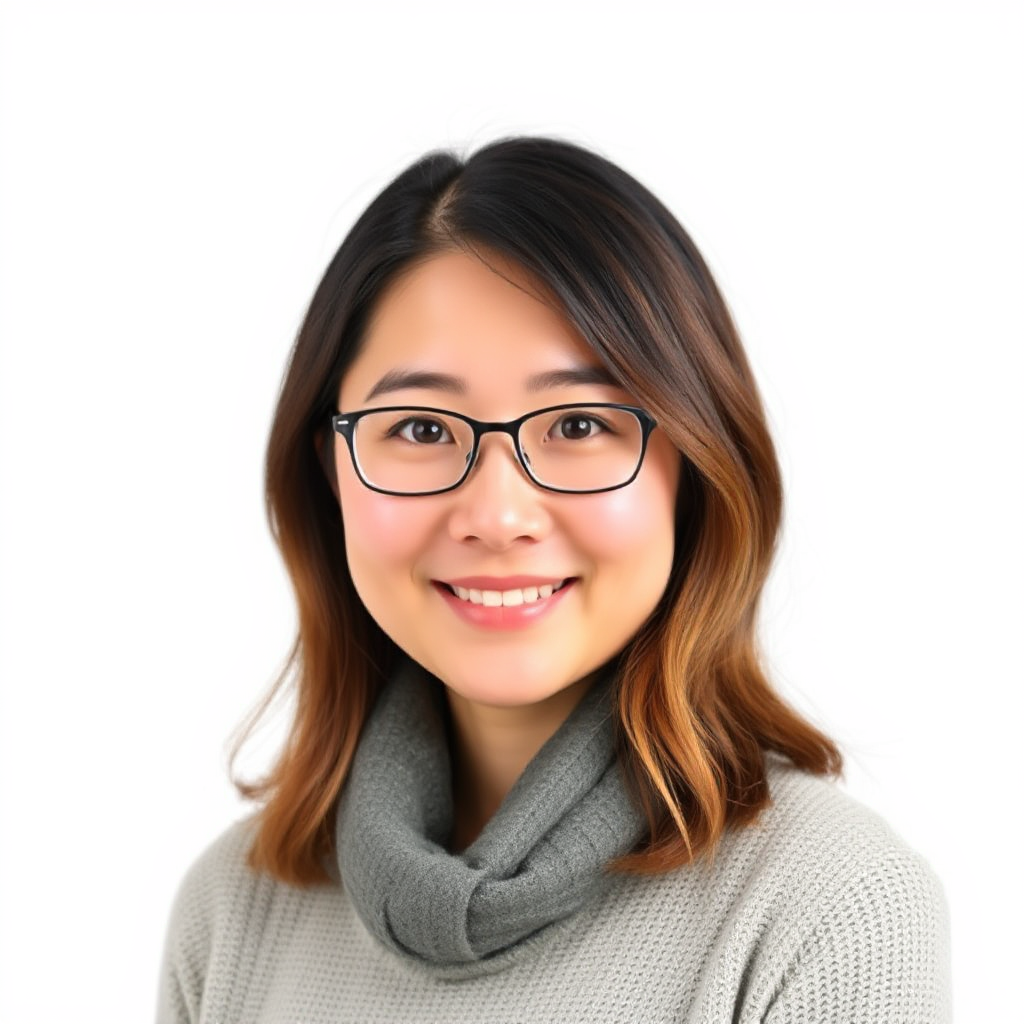
When Vickie Wang, a rising comedic talent, takes the stage in the Big Apple, she's not only thinking about which jokes to deliver. She also weighs what subjects to steer clear of. “I refrain from directly criticizing the government,” she explained. Or if she ventures there, she ensures it isn't recorded for online platforms. “I'd never publish openly material where I openly disparage authorities … I believe this is a learned behavior from China.”
The comedian, 39, lived in the Chinese metropolis for almost ten years, leaving in that year. In 2025, she relocated to the US. When she got there, she dove into a frenzy of “overindulging on freedom,” attending talks, demonstrations, and exploring New York’s public library.
However in the year since Donald Trump returned to office for the second time, there's been a noticeable shift in the environment, she says. “In China, I understood the boundaries, whereas in the US I'm standing on shifting sands.”
Wang’s fears mirror an emerging climate in the US which numerous individuals from China, or people who have lived in China, find disturbingly similar. Enemies are ostracised. The leader demands absolute loyalty. Reporters face scrutiny. Establishments come under fire.
The president has openly expressed about his admiration for Xi Jinping, the nation's authoritarian figure. He has described Xi as a “great guy”. As they agreed a temporary truce in the trade war recently, the camaraderie between the two leaders of nations with vastly different governance models was evident. Following years of hope in the US that closer ties with China could assist the growing nation become more open, under Trump 2.0, it seems that America is being pulled in the Chinese direction, instead of the other way around.
“The United States is experiencing an era of cultural revolution,” stated Zhang Qianfan, a professor at Peking University. “The top leader, Trump, is trying to rally the masses to marginalize or undermine established figures … similar to what happened in China half a century ago.”
Since Trump unleashed what's termed a government streamlining body, or the agency, on federal institutions at the start of his term, numerous Chinese observers have viewed American governance via the perspective of China's historical period. Be it the rallying of young people to execute presidential directives, or purging organizations of perceived enemies, the president from a Chinese viewpoint has delivered disorder reminiscent of Mao to America, though without the same levels of force.
However after the upheaval of the early months under Trump subsided, a new, distinct type of political atmosphere has settled in the country, which in different ways seems familiar to numerous Chinese individuals.
‘The Beacon Has Become Less Bright’
The deepest similarity between Trump’s America and the East is the suppression on open expression.
Deng Haiyan, turned CCP dissenter, found himself in the eye of a storm recently, similar to what he’d only previously experienced in China. He resided in America for several years, having fled China due to pressure from officials.
In September, following the passing of a public figure, he posted that Kirk was a “scumbag”. Similar to others nationwide – who were fired as a result of making negative comments regarding him – he encountered significant backlash. His family had personal info leaked and he was accused of being a Chinese spy attempting to divide the US.
“That event was a real shock. I never imagined such a thing would occur in America – what should only happen in an authoritarian country,” he commented.
Deng’s backlash came from fellow social media users, rather than the government, but such of social surveillance bears similarities with China.
“Regarding targeting those who disagree and starting to surveil public speech about issues that are sensitive … That’s starting to emerge here,” said Maria Repnikova, a scholar at Georgia State University. “This is that you see in China now as too,” she said, stating that there were now fears in the US of students reporting on educators, a form of surveillance that has been encouraged by the CCP.
The professor, the Peking University law professor, said that liberal Chinese intellectuals like himself used to look to the US for ideals, in part because openly discussing internal affairs in China is risky. However, “The US isn't a god for Chinese liberals. America’s image has declined generally.”
“We once viewed the US as the beacon of constitutional democracy, but after Trump took power, that guide seems to have become dimmer”.
Progressive Chinese, typically, behind closed doors, skeptical about the nation's governance, are increasingly finding it more acceptable than America’s, Zhang said. “It’s sort of difficult to acknowledge this reality … but post-COVID, the government seems to be doing the right thing in improving the environment and promoting EVs and tech investment,” he noted, while “Western nations, exemplified by the United States, appear in decline.”
The Trump administration’s acquisition of shares in US companies has also drawn parallels with the East, where the distinction between government and business is frequently unclear.
Recently, authorities announced it will take a shareholder in a startup focused on mineral refinement, following comparable shares in additional firms it considers vital to national security. The deals have left some investors nervous that the US is embarking on a new era of state intervention in private industry.
Yet, there remain significant distinctions between the US under Trump and the East. In October, multiple media outlets including the Guardian declined to agree to a Pentagon policy that demanded they only report on approved news. American judiciary have halted or overturned many of Trump’s actions, something that would be unthinkable in the nation's party-dominated judiciary.
An analyst, the founder of Strategy Risks, specializing in China, said: “America might face the worst crisis of its history, orders of magnitudes worse than currently, and it will still be freer, open, and more liberal than the East under its leader.”
Zhang observes that although many intellectuals in China were surprised to see US universities yield to official requests concerning DEI policies and free speech on university grounds, in the East, the top universities are publicly controlled inherently. Administrators, which are selected by the government, “have no liberty refuse. They can’t afford to be disobedient.”
Still, Americans are starting to take precautions that were once associated with more authoritarian countries. An academic at an American college once vocal on bilateral matters refused to speak for this piece. He stated: “The truth is, I am scared of the censorship here: I genuinely feel less afraid criticizing China's leader now than say anything bad


